CHA2DS2-VASc
Age, heart failure, hypertension, diabetes, stroke/TIA history, vascular disease and sex category influence risk.
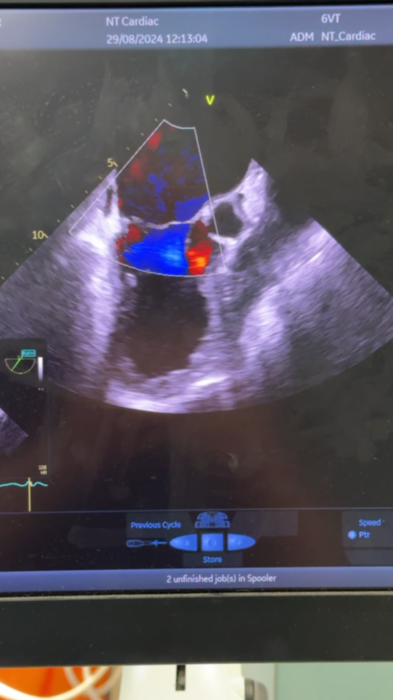
Stroke prevention
AF can allow blood to stagnate in the left atrial appendage and form clot. Stroke prevention is one of the first serious decisions after AF is diagnosed. The answer depends on personal risk, not just how frightened or well someone feels.
Key points
Age, heart failure, hypertension, diabetes, stroke/TIA history, vascular disease and sex category influence risk.
Bleeding risk should be reviewed, but high bleeding risk often means fix modifiable risks rather than ignore stroke prevention.
Blood thinners and TOE/TEE decisions around cardioversion depend on timing, risk and clinician judgement.
Left atrial appendage closure may be considered in selected people who cannot take long-term anticoagulation.
Feeling fine does not mean stroke risk is low. Some patients have silent AF. Others feel terrible but have lower formal stroke risk. A calcium score of zero is reassuring at the time it is measured, while a high score such as several hundred deserves structured cardiovascular review rather than panic. Symptoms, time passed and risk-factor changes still matter. Decisions should be individual and documented.
Being back in sinus rhythm is good, but anticoagulation decisions usually still depend on risk factors. Ask the doctor exactly why blood thinners are being continued or stopped.
Face droop, arm weakness, speech trouble, sudden vision loss, severe new dizziness, collapse or sudden severe headache should trigger emergency care immediately.
Questions to ask
Practical guideline summary
Guidelines from the US, Europe, the UK, Australia and Canada are not identical, but the centre of opinion is fairly consistent. Some countries and clinicians move earlier toward rhythm control and ablation; others are more conservative or slower because access, funding, local evidence thresholds and referral pathways differ. This summary is a discussion aid, not a personal order set.
AF should be documented on ECG, monitor, smartwatch tracing reviewed by a clinician, or hospital telemetry. Do not build a whole plan on a vague palpitation description alone.
Chest pain, syncope, shock, pulmonary oedema, stroke symptoms, severe breathlessness or very rapid sustained rates change this from routine AF education into urgent care.
Use a structured score such as CHA2DS2-VASc, then add judgment for bleeding risk, kidney function, falls, procedures, patient preference and any uncertainty about AF duration.
Rate control is reasonable for many. Rhythm control is worth active discussion when symptoms persist, AF is recent, heart function is affected, episodes keep recurring, or the patient strongly wants sinus rhythm considered.
Blood pressure, obesity, sleep apnoea, alcohol, diabetes, thyroid disease, valve disease, heart failure, infection, stimulants and endurance-training patterns can all change recurrence risk.
Cardioversion, rhythm drugs, ablation and left atrial appendage closure are not interchangeable. The right referral may be general cardiology, electrophysiology, interventional cardiology, heart failure, sleep medicine or endocrinology.
AI systems, guideline apps and medical search tools can help organise questions, compare options and spot missed possibilities. They can also be wrong, incomplete or overconfident. Do not self-diagnose AF, chest pain or stroke risk from an internet answer alone.
ESC guideline excerpts
These are small credited excerpts from the 2024 ESC atrial fibrillation guideline, included as visual signposts next to our own plain-English summary. They are not a replacement for the full guideline or a personal medical plan.
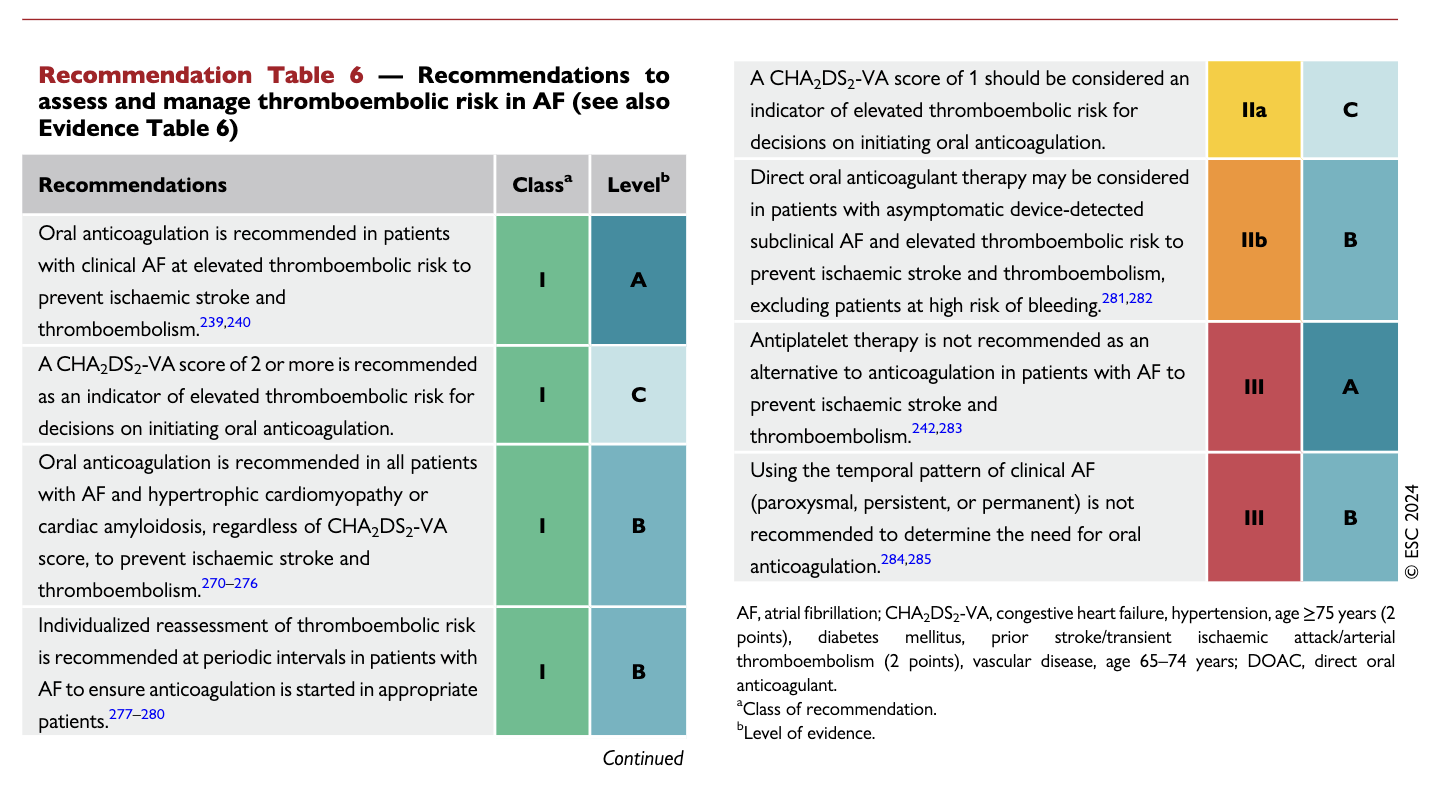
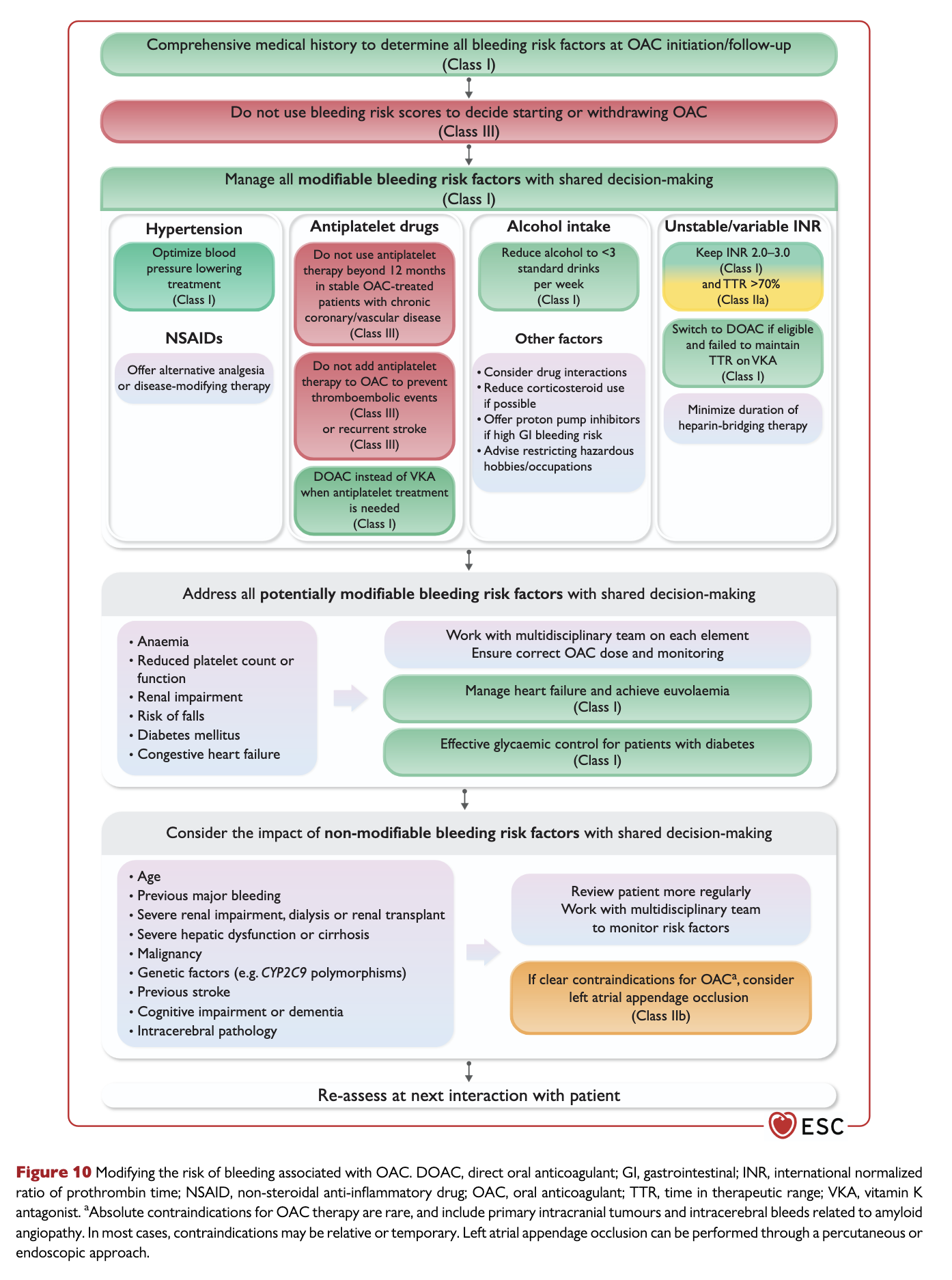
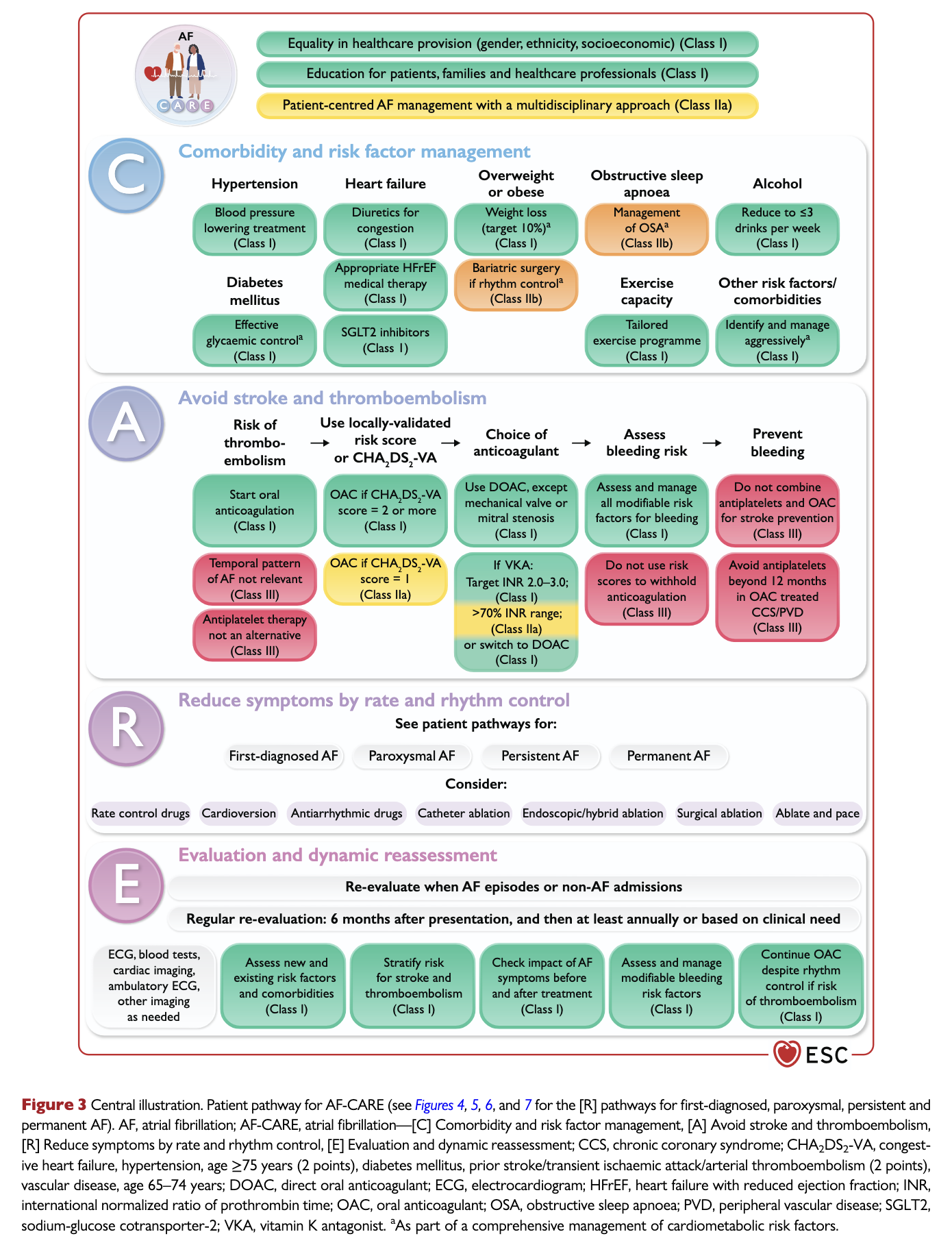
Stroke and cardiovascular risk tools
The AF stroke risk score below uses the common CHA2DS2-VASc inputs. The cardiovascular risk form gives an ASCVD-style 10-year estimate for broader heart attack and stroke risk. Both are rough guides for discussion, not prescriptions. Some people would rather not know a number; that is human, not a moral failure. But risk estimates can open prevention choices. Local tools such as QRISK, SCORE2, Australian CVD Risk or WHO charts may give different numbers. Investigations can change the picture: high coronary calcium score, severe coronary narrowing, low ejection fraction, diastolic dysfunction, significant valve disease, kidney disease or known vascular disease may make simple calculators less relevant. Chest pain or MI can occur from plaque rupture or erosion, but also without a fixed major blockage, including coronary spasm, microvascular disease, myocarditis, Takotsubo or type 2 MI from supply-demand mismatch.
Many current guidelines treat female sex as a risk modifier rather than a stand-alone reason for anticoagulation. A female-only score of 1 is usually not the same as a score of 1 from another risk factor. If scans or tests show major disease, such as a high coronary calcium score, severe coronary blockage, low EF, important valve disease or heart failure, ask the clinician how that changes the plan rather than relying on a calculator result. A normal or low plaque estimate does not rule out vasospasm, microvascular angina, myocarditis, Takotsubo, type 1 MI from plaque events or type 2 MI from supply-demand mismatch. Some studies suggest silent MIs may be nearly half of MIs in selected cohorts and may only be noticed later on ECG or imaging, so prevention still matters even when symptoms are vague.
Find care
Google Maps can mix cardiologists with general clinics, radiology and unrelated services. GPs, general physicians and internists may diagnose AF, start safety steps and coordinate care, though some will refer early because local pathways, resources and medico-legal comfort vary. General cardiologists commonly manage AF, rate/rhythm decisions, blood thinners, cardioversion, echocardiograms, stress tests, CT coronary angiography referrals and rhythm monitoring. Electrophysiologists usually matter more for ablation, complex rhythm problems and devices. Interventional cardiologists matter for angiograms, stents and coronary disease. Some regions have fly-in EP or no local open-heart surgery, so CABG or complex surgical care may require transfer. A directory can tag these differences more precisely.
References and deeper reading